Surface shelves: bags, caps, belts, eyewear and jewelry
Accessories are where warehouse photos earn their keep. Fit matters less; finish matters more, and finish is what a camera sees.
For a bag or a belt, the questions are about surfaces: are the corners scuffed, is the edge paint even, is the plating clean, is the stitching straight. Those are visible in three ordinary photos when the photos are sharp. UIDBuy's help center says standard photos are taken from fixed angles per category, and that you can ask for a re-take when they come out blurred.
When three angles are not enough, a detailed photo is 1 RMB, and one request can hold as many as 20, aimed wherever you like. For accessories that is cheap insurance. Each shelf below names the close-up worth paying for.
Shelves on this page
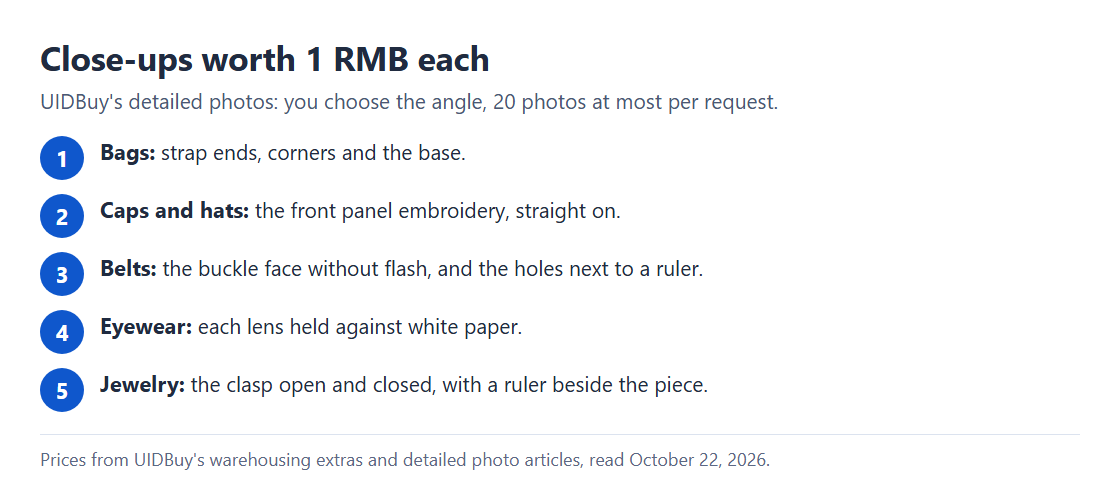
Bags: corners, straps and the lining
Bags photograph well. Three standard shots usually show the front, the back and the inside or a strap, which is enough to spot scuffed corners, crooked stitching and peeling edge paint.
Ask for a photo of the strap ends and the base if the bag is leather or suede, since that is where wear and glue show first. Stiff bags keep their shape in the box, so they add volume to a parcel even when they weigh very little.
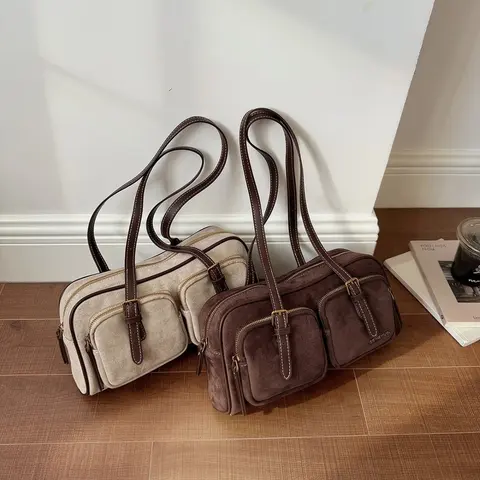
Spotted on this shelf: Two suede shoulder bags in cream and brown with long leather handles.
Shown at ¥99.50 in the catalog on October 23, 2026. Prices on Chinese marketplaces move, so treat it as a ballpark.
Belts: buckle face, edge finish and hole spacing
Belt photos show the buckle and the strap edges well. Plating marks and edge paint flaws are visible if the photo is sharp; ask for a re-take if it is not, which UIDBuy says it will do for blurred standard photos.
Most belt charts give length from the buckle's pin to the centre hole. Check the strap width too, since buckles are made for one width. The tile photo is the seller's own, with the buckle logo already blurred.
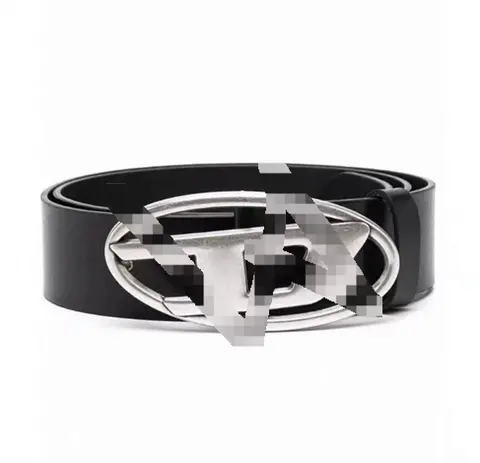
Spotted on this shelf: A black leather belt with a large silver oval buckle, logo blurred by the seller.
Shown at ¥72 in the catalog on October 23, 2026. Prices on Chinese marketplaces move, so treat it as a ballpark.
Caps: the front panel carries the evidence
A cap's front panel carries the embroidery, so inspectors photograph it closely. Thread colour, stitch density and whether the lettering is centred all read clearly.
Fitted caps come in sizes, snapbacks do not, and bucket hats are usually one size with a stated head circumference. Ask the warehouse to keep the cap's cardboard insert if you want it to arrive in shape, and accept that some routes will crush it anyway.
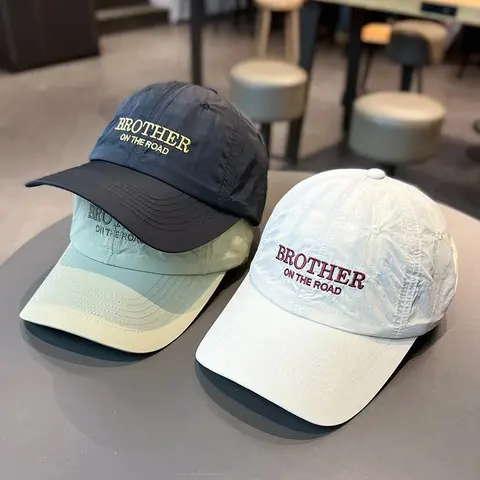
Spotted on this shelf: Navy and white baseball caps with embroidered lettering on the front panel.
Shown at ¥43 in the catalog on October 23, 2026. Prices on Chinese marketplaces move, so treat it as a ballpark.
Eyewear: scratches hide in reflections
Inspection photos of glasses tend to reflect the warehouse lights, which hides fine scratches on lenses. Frame shape and colour are reliable; lens finish is not.
Ask for a photo of each lens against a plain background, and for the case to be photographed if it matters to you. Hard cases add volume. No agent's inspection covers prescription lenses.
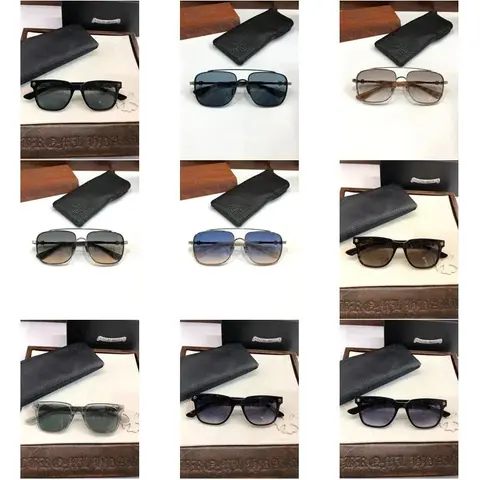
Spotted on this shelf: Nine pairs of sunglasses resting on black cases, all on one listing.
Shown at ¥260 to ¥560 in the catalog on October 23, 2026. Prices on Chinese marketplaces move, so treat it as a ballpark.
Jewelry: clasps and plating edges
Small pieces are photographed close up, which helps. Clasps, stone settings and plating edges are what to look at; a ring's real size is not visible in a photo without a ruler.
Ask for a photo next to a ruler for rings and pendants. UIDBuy's help pages list restricted goods for shipping; precious metals and real gemstones are the kind of thing to check against those lists before you buy, not after.
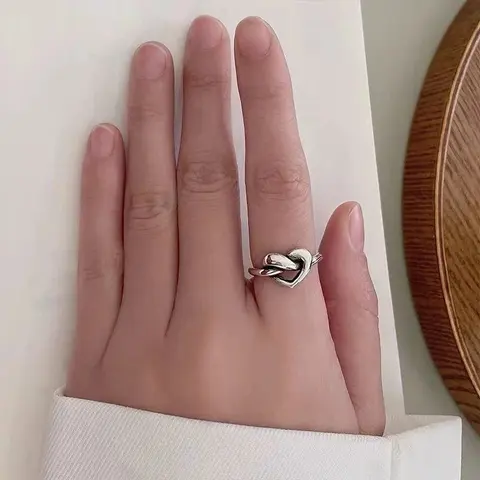
Spotted on this shelf: A silver heart-knot ring worn on a hand.
Shown at ¥28 in the catalog on October 23, 2026. Prices on Chinese marketplaces move, so treat it as a ballpark.
Close-ups worth the extra yuan
Three standard photos are free. Detailed photos are paid at 1 RMB each, up to 20, and you write what you want photographed. On accessory shelves the useful requests are short and specific: "strap ends and base of the bag", "buckle face, straight on, no flash", "each lens against white paper", "clasp closed and open". Vague requests such as "more photos" get more of the same angles.
Ask once, at order time if you can. UIDBuy accepts detailed photo requests both when you submit the order and after the item is stored, but asking up front means the photos arrive with the first inspection instead of a second round.